Wednesday, May 06, 2015

Wounded Knee


“Wounded Knee” was named after a brutal conflict, which took place in South Dakota in 1890. It resulted in the deaths of over 350 Native Americans as well as 25 soldiers from the U.S Army’s 7th Cavalry.
The root cause of the massacre harks back to the mid-19th century when more and more white men started to settle down on Sioux lands.
In 1868 Red Cloud, one of the Sioux leaders, signed the Treaty of Fort Laramie, which ensured that the Lakotas were the owners of the Black Hills, straddling Wyoming and Montana. In addition, all those living on the reservations would be legally protected and would be able to farm as they saw fit.
A few years later gold was struck in the Black Hills. The ruling white Americans broke the treaty and invaded those promising territories, which eventually led to the Battle of the Little Bighorn in 1876. The clash opposed the federal troops headed by Colonel Custer and Sioux warriors, whose leaders were Sitting Bull and Crazy Horse. The U.S Armies were quickly overwhelmed and Custer and his soldiers fell victim of merciless attacks.
The so-called Ghost Dance was thought up by Wovoka, a spiritual leader who claimed to be a messiah. The tradition was passed down till 1890. As the government became increasingly worried about a growing uprising, the reservation police received orders to put Chief Sitting Bull under arrest on the Standing Rock Reservation. On that very day he was assassinated.
On 29th December 1890, a detachment of the U.S.’S 7th Cavalry Regiment, led by Colonel James W. Forsyth, surrounded Big Foot and his people in a camp near Wounded Knee Creek. A fight broke out, resulting in a massacre of more than three hundred and fifty Indians, half of whom were women and children. Some died on the spot while others froze to death in the snow. The cavalry lost only twenty-five men.

This battle cannot be considered to have been fair since Big Foot, surrounded as he was by armed troops, most likely did not launch an attack without any chance of overcoming. He nevertheless was shot cold blood.
This massacre is believed to have been the last showdown between Native Americans and the United States Army. In December 1890 A United States census declared the frontier officially closed.
In 1973 another watershed event occurred when Native Americans stood up against governmental atrocities.
The insurgents reclaimed Wounded Knee in the name of the Lakota Nation, demanding more independence from the Federal Government.
According to the 1868 Sioux treaty, which was still in effect, the Black Hills had never ceased to belong to the Sioux. Their leaders consequently pressured the Federal Government to abide by the treaty.
The Wounded Knee occupation lasted for seventy-one days, during which time two Sioux men were shot by federal agents and an agent ended up paralyzed.


A museum was built in the valley to preserve the memory of those who gave their lives so as to assert their right of living on their own lands.


 ©Fanny Voisin - Jasmine Léonard - Martin Denis

Skippy the Bush Kangaroo


Following the success of both Lassie and Flipper in the USA, it is not really surprising that the Australians wanted to have their own superstar pet too.  So was born Skippy the Bush Kangaroo, an Australian television series created by John McCallum in 1967.  


It tells the adventures of a young boy called Sonny Hammond and of his best friend, a kangaroo called Skippy.  Sonny lives in the Australian bush with his brother and his father, the Head Ranger of Waratah National Park. Sonny’s mother is said in the 48th episode to have died soon after his birth.  In addition to that, the Hammond family is visited by guests such as Clancy Merrick (the daughter of another ranger) and Dr Steiner (a German doctor), who contribute to the action in various episodes. The series covers different themes, from pet loyalty and Australian wildlife to family values, with some clichés anchored in the 1960s.  Skippy is a very clever kangaroo who can communicate with humans, understand what they say, and hold objects in her pouch.  Thanks to these skills, she is able to help her masters and save the day.  


The main actors are Ed Devereaux (as Matt Hammond), Garry Pankhurst (as Sonny Hammond), Ken James (as Mark Hammond) and Tony Bonner (as Jerry King).  Skippy, however, was played by nine different female Eastern Grey Kangaroos. As opposed to apes and dogs, however, kangaroos have low mental capacities, which made it impossible for the film crew to train them.  They therefore used sticks covered with fur to pretend that Skippy was moving her paws.  Animals on the set were regularly inspected, which was not the case on the set of Flipper, where dolphins were mistreated. The show, which is divided into three seasons, counts 91 episodes, the last of which was aired in 1969. The series was shot in northern Sydney at the Ku-ring-gai Chase National Park and the adjacent Waratah Park (now known as Waratah Park Earth Sanctuary).   

The show was filmed in colour, translated into 25 languages and aired in 128 countries including Iran, Czechoslovakia and the Soviet Union, with each week 300 million viewers around the world. Despite the fact that the series is over, there have been various reruns in the 1980s, and occasionally until 2009.  In 1969, a film based on the series, called Skippy and the Intruders, was released and in 1992 the series was revived under the name The Adventures of Skippy, presenting an adult Sonny who has become a ranger in the wildlife park.  All of this has contributed to the series becoming very popular in the audience’s mind.  Instantiating that is the fact that the image of Skippy the Bush Kangaroo was used in advertising campaigns, such as the one for Rolo chocolate Cookies. Furthermore, a documentary was produced as recently as 2009. 


In conclusion, it is the joyful features of Skippy the Bush Kangaroo, but also the universal themes, which have been popularized by reruns, remakes, translations, and reminded by several implications in advertising campains, that have contributed to the amazing and extended success of the series.  Eventhough it originally aims at a young audience and broadcasts a vision of the world that is typical of the 1960s, it will probably remain an important part of Australian culture.

Jonathan Thys, Héloïse Pierret and Marie Mathieu

Jeremy Clarkson


Jeremy Clarkson is well-known for his bad behaviour. It all began when he was expelled from school in his teenage years for drinking and smoking. Despite a disastrous past in school, he eventually managed to find his own professional  path. 


Born in April 1960 in Doncaster, England, Jeremy Clarkson is a journalist, broadcaster and writer. He is considered an icon of anglophone culture. He is the father of three children named Emily, Finlo and Katya. In May 2014, he got divorced from his second wife , Frances Cain. She was his manager and their marriage lasted twenty-one years. 

In his mid-twenties, he started a career as a journalist for the local press. In 1988, his passion for cars led him to co-host Top Gear, the famous motoring TV show of the BBC along with James May and Richard Hammond. The show was not really successful at first but became one of England's favourite programme after its relaunch in 2002. The key to this success is the humorous touch that was added to it and, of course, Clarkson’s outspoken remarks. 

Jeremy Clarkson also writes weekly columns for two newspapers: The Sun and The Sunday Times. 
He has become a very important English personality in the 1990's, thanks to his many appearances on television as well as to his shows or his books, for example the "World according to Clarkson" series, which has achieved considerable success. As a result, his fortune is now estimated at fifty-five million pounds.
Thanks to this amount of money, he was able to feed his passion for cars. One never seemed to be enough, however, and he now owns twenty luxury ones. Twenty also appears to be the number of cars he has crashed. 

He is loved by many people and some of them have even suggested that he could be the next Prime Minister. As a matter of fact, David Cameron has even said that the Top Gear presenter was a friend of his.


If he is appreciated for his sarcasm and for his writing and presenting skills, he is also hated for many other reasons. He has, for example, caused many scandals following some of his racist statements. Recently, things went even further and, on 25 March 2015, the BBC announced that Jeremy Clarkson would not be hosting the show anymore. This decision followed an incident in which he had verbally and physically attacked a Top Gear producer at a hotel while filming there. 

The day he received an honorary degree for his championing of high standards in engineering at Oxford Brookes University in 2005 was a very special day. A woman named Rebecca Lush threw an egg at him in protest over the fact that his job was harming the environment.
Even though what he does and says does not always seem nice, he recently apologized in a video for supposedly making racist statements about foreigners. 


As some people say, Jeremy Clarkson is someone you either love or hate. 

Juliana Bolzonello, Marion Bouzet and Bérénice Kimus 

Tuesday, May 05, 2015

Batman


1. Origin

Batman first appeared in March 1939, in the 27th issue of Detective Comics, published by DC Comics (though May 1939 is indicated on the cover, because cover dates were used to let newsdealers know when to remove the unsold copies). Thus, 2014 was Batman's 75th anniversary.

2. The creators

The creators of Batman are Bob Kane and Bill Finger. Bob Kane created Batman as a combination of Zorro, the Shadow and Dracula. He asked for Finger's advice, who changed the wings for a scalloped cape, the domino mask for a cowl and the red costume (reminding of Superman) for a grey and black one. He also made Batman a detective. Bill Finger wrote the first Batman comic and many others but was uncredited with them. However, on the cover of DC Comics' 75th anniversary edition of the first Batman issue, you can finally see Finger's name. It was the first time it had ever happened.


3. Batman's story

The story begins in a realm called “Gotham City”, Batman’s hometown. The young Batman, whose real name is Bruce Wayne, lived happily with his parents until the dark day of their death. The child had to watch his parents get killed in front of him, and he could not do anything against it. On that day, Batman swore an oath to spend the rest of his life fighting against the dark forces, and by doing so, to avenge his parents. He began his training by leaving Gotham City and travelling abroad. He went to Europe and studied in various European universities. He developed both his mental and physical abilities to become as strong as he could. Years later, he came back to Gotham City, ready to fight crime. But one thing was missing: his costume! As a child, Batman was extremely scared of... bats. That is why he chose this unusual animal as his symbol. Batman quickly became an urban legend, fighting and defending the city every night. He made some friends and sidekicks but also many enemies. He also joins other superheroes and belongs to the Justice League. The rest of the time, Bruce Wayne is a famous, wealthy business man.

4. The cultural impact

Batman touched a lot of people by portraying a battle against evil. Besides the fact that Bruce Wayne marvels children by being a righteous person, brave and ingenious, he also imparts noble values. The policy of Lyndon Johnson, known as the 'Great Society' from 1965, is behind most of them. Indeed, Johnson’s values such as fighting poverty, helping needy families and saving money for honourable undertakings are those that this cloaked character supports. Moreover, the popularity of this superhero has been used to give hope and joy. For example, Lenny B. Robinson started in 2012 to visit children hospitals dressed like Batman, delighting the sick kids. Finally, we have the series and films that contributed to Batman's popularity. In 1943, the masked hero appeared for the first time on a screen. It was the first of a long series of adaptations and the next one is scheduled for 2016.


Justine Bauvir, Marine Jacob, Hanae Roquet

Fred Rogers


Fred McFeely Rogers was born on 20 March 1928 in Pennsylvania, United States of America. He was a television host for forty-seven years and gained a lot of success among children, but he also became a hero for adults. How did he manage to build such a successful career? In order to answer this question, we are going to write not only about his television career, but also about his private life. At first, we will focus on his early life, then on his career, and eventually on the last days of his life. All of this will lead us to a conclusion explaining the message he left to society about childhood education.


First of all, during his childhood, Rogers was very close to his grandfather, Fred Brooks McFeely, after whom he was named. At the age of five, he began to play piano on his own. When he turned eleven, his parents adopted a baby girl called Elaine. After high school, he studied at Dartmouth College and then went to Rollins College in Florida, where he graduated in Music Composition in 1951. One year later, he married Sara Joanne Byrd, who gave him two sons: James and John
Fred Rogers' wedding


In 1951, right after graduating, he was hired at NBC, a broadcast television network in New York. As he said in an interview with CNN, he went into television because he wanted to change the way it educated children: he thought there was some way of using this fabulous instrument to nurture those who would watch and listen. Therefore, after three years, he left NBC because, according to him, it only used television for a commercial purpose. Later, he began to work on many children’s shows. At first, he worked on “The Children’s Corner”, and at the same time was studying theology. He was therefore ordained after obtaining his divinity degree. Then, the United Presbyterian Church asked him to continue his children’s programmes. For this reason, he created “Misterogers” and “Mr. Dressup”, which were broadcast in Canada. Eventually, he created his own children’s programme, “Mister Rogers’ Neighborhood”, at first broadcast in Canada, but he later moved it to Pittsburgh, in the United States. The main feature of this broadcast is that it tries to convince children that they have worth. Furthermore, each episode is named after the value Fred is presenting in.  For instance, the following episode is dealing with divorce.


Finally, in 1997, he received the Lifetime Achievement Award at the Daytime Emmys, where he made a speech, thanking all the people who had helped him and motivating everyone there to do just like him. In 2000, he played in his last episode, not long before being diagnosed with stomach cancer. He died on 27 February 2003. 


In conclusion, Fred Rogers changed television’s role towards children and left his mark in society by confronting children directly to real life and encouraging them to be themselves.  All of this shows how devoted he was to childhood education and to the passing on of human values.


Emma Bujiriri, Kaltrina Gashi, Elif Kasap

The Statue of Liberty


The Statue of Liberty is one of the most famous monuments in the world for several reasons.


 Let's start with a bit of history. In 1865, Edouard de Laboulaye, a French politician, suggested building a statue representing liberty in order to honour the American Declaration of Independence. He saw in this project the opportunity to strengthen the democracy in France. In 1870, Frederic-August Bartholdi, who was a French sculptor, started designing the statue and selected the site on which it would be erected: Bedloe’s Island, situated in the Upper Bay of New York and thus visible to every ship. Gustave Eiffel designed the statue’s iron internal support structure. The construction of the internal structure began in 1876. Although the French constructed the statue’s body,  an event that was celebrated with parades on both sea and land. The statue became a national monument in 1924. Between 1935 and 1957, the refurbishment of both the statue and the additional structures took place so as to later attract more visitors. Years later, however, in 1982, the statue was found to be in need of an even greater restoration, which President Reagan consequently ordered. It was finally completed in 1986.

The Americans had to build the pedestal, the construction of which started in 1884. The statue arrived in New York in 1885 and thus the American had to assembly the statue. When this work was finished, it was unveiled on 28 October 1886.
As far as the Statue's appearance is concerned, we might think at first sight and from a distance that it is not very big. In fact, it measures 93 metres, and weighs 225 tonnes.
The female figure represents Libertas, the goddess of freedom. It stands for the value of liberty as Libertas has escaped the chains of tyranny and has moved away from oppression and slavery in the Roman Empire. The broken chains, although difficult to see from the ground, lie on her feet. What first catches our eyes is the torch that she holds in her right hand. “It lights the path to freedom and demonstrates the power of light over darkness”. Moreover, Bartholdi settled on a keystone-shaped tablet in her left hand which reminds us of the concept of law and justice. It reads "July 4, 1776", which refers to the American Independence Day. The United Sates Constitution suggests that all men are equal, regardless of race, sex or social class. It also wears a crown with twenty-five viewing windows and seven spikes that represent the seven oceans and continents. Besides the value of freedom, the Statue has also become a symbol for immigration, representing a welcoming signal to immigrants arriving through Manhattan.

Contrary to popular belief, it is not the most visited monument in the United States. Indeed, there were 3.44 million visitors per year during the last seven years. That is ten times less than Central Park or Times Square, which both number 40 million visitors each year. In 2013, there was a drop of the number of visitors. Indeed, Hurricane Sandy swept Liberty Island so that the Statue remained closed for months. Due to the hurricane’s high winds, the park round the Statue was destroyed, but Liberty itself was not damaged.

Moreover, there are a lot of replicas of the monument in many cities such as Austria, Germany, Norway or Spain. 
The main one is in Paris: it was also crafted by Bartholdi on the occasion of the “Exposition Universelle” of 1900. All these replicas show the prestige of the Statue and its importance all over the world.


In conclusion, the Statue of Liberty is an icon of Anglophone culture because it is the symbol of democracy, freedom, justice for everyone. It is a world- renowned monument that is not going to be forgotten or lose its popularity any time soon.

Charlotte Laurent, Camille Persoons, and Pauline Rogien


Monday, May 04, 2015

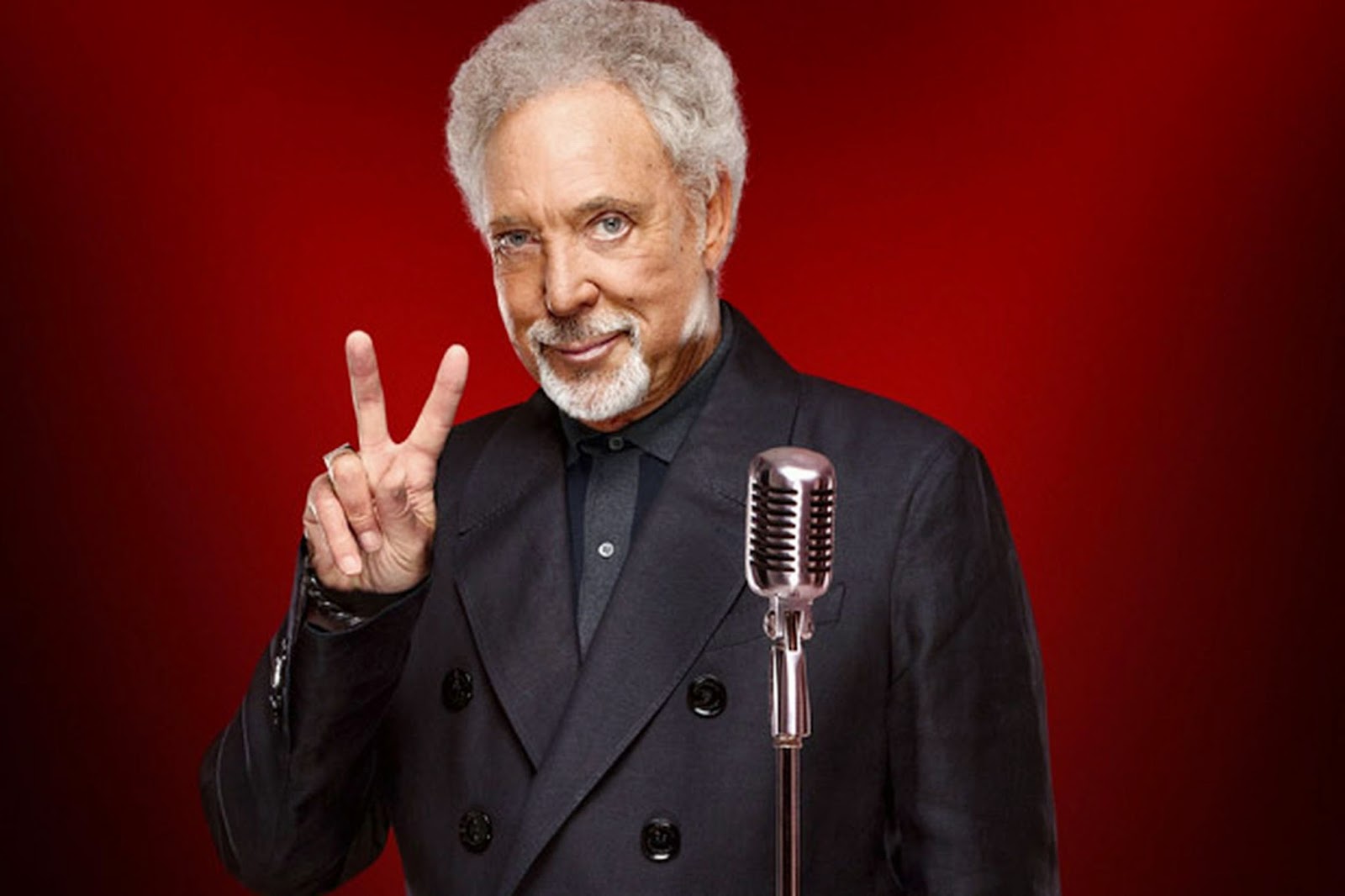
Tom Jones, an icon of the Anglophone culture


Sir Thomas Jones Woodward also known as Tom Jones is a singer born on 7 June 1940 in Pontypridd, South Wales, Great Britain. He comes from a coal-mining family. He began to sing in the church choir at an early age. He was not very interested in school so he left at sixteen and he earned money by doing different jobs.
 In 1957, he married his high school girlfriend and had his son, Mark. In 1963, he became the lead singer of the group Tommy Scott and the Senators and during a performance, he was spotted by Gordon Mills, a London producer and songwriter, who became his manager.

His first single didn't catch on but his second one "It's Not Unusual"immediately achieved considerable success.


Since this song Jones has become increasingly famous. He won his first award in 1966 and, from then on, he won still more and more.
In 1967, Jones performed in Las Vegas for the first time: it has since then become part of his daily life. He met Elvis Presley in 1965 on a film stage but their friendship really began when they started to spend more time together in Las Vegas.
Then, Jones temporally left the front of the scene to focus on his career at television.
In 1969, he produced his own TV show, "This Is Tom Jones", which was broadcast in both the United States and Great Britain. This lasted three years.
Later, he decided to focus on his musical career again by releasing albums and touring internationally.
After Gordon Mills’s death in 1986, Jones's son, Mark, replaced him.
After signing with Interscope Records in 1993, he released some new songs which put him back on the charts again. A lot of collaboration projects followed with a lot of success in both television and music. For instance, he wrote several scores such as the famous "You Can Leave Your Hat On" in the film The Full Monty.
The 21st century got off to a good start with his single "Sex Bomb". 


After being awarded an OBE (Order of the British Empire) in 1999, he was knighted by Queen Elizabeth II in 2006 for his services to music.
Moreover, Jones has participated in several charity and ceremonial concerts such as the Queen's Diamond Jubilee Concert.
Because of his status as a sex symbol, he has had many groupies, some of whom he cheated on his wife with. However, he and his wife have remained married since 1957. One of his numerous affairs resulted in the birth of a son for whom he has never shown any interest.
Despite the fact that his successful period is now over, he is still famous thanks to "The Voice UK", where he has been acting as a coach since 2012.
In conclusion, Jones is an icon of the Anglophone culture, selling over 100 million of records since 1965 hence he got the third position in the top 100 of “100 Welsh Heroes”, an opinion poll from 2003.
Marjorie Guadagnin, Margaux Savary, and Mélanie Vigneron